

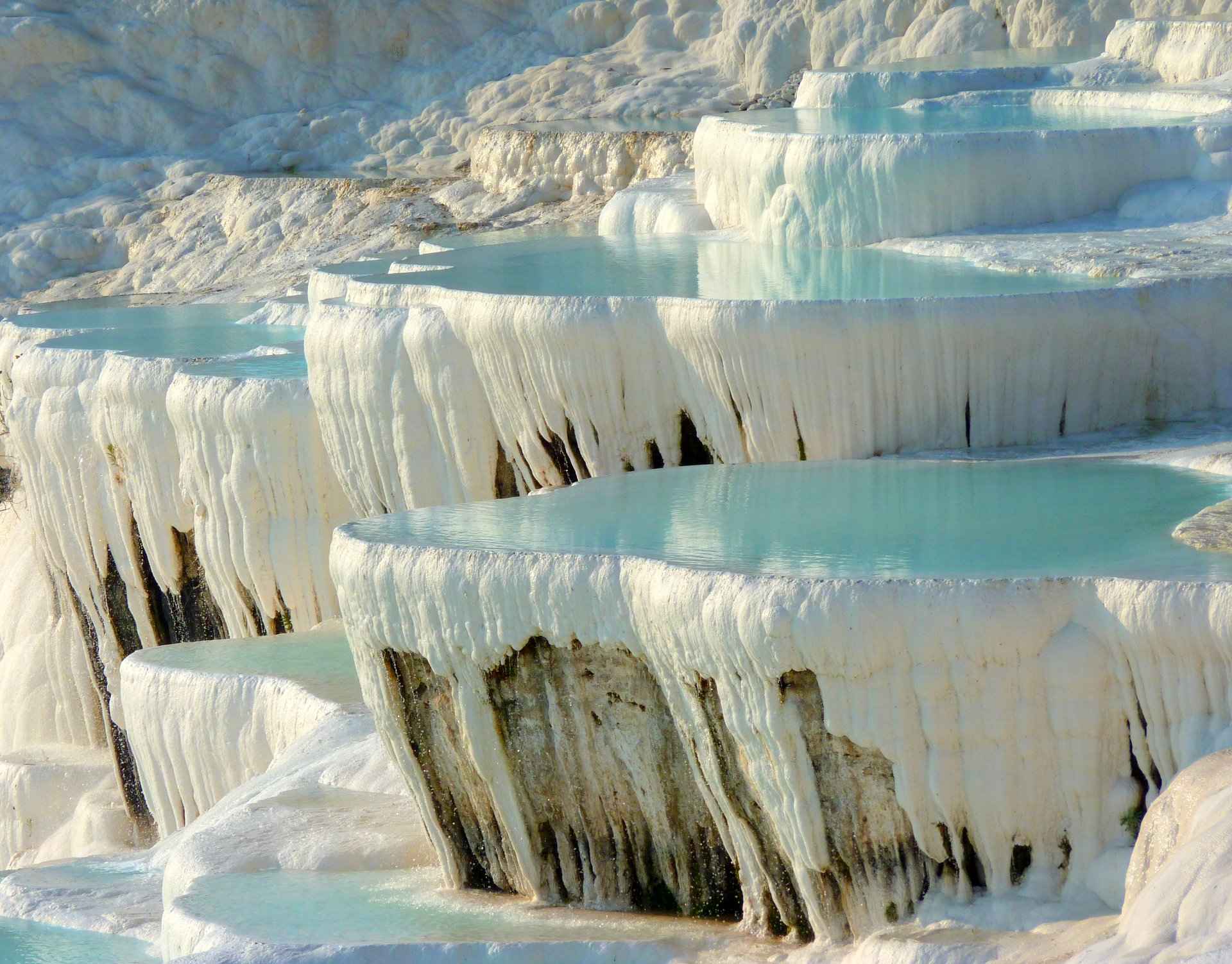
Quick answer
Travel between the two sites is overland, eastward toward Denizli, and it works best when arrival falls inside the 06:30–09:00 window at Pamukkale. The travertines and Hierapolis open 06:30–20:00 daily, so an early departure from Selçuk leaves the full day intact. Summer heat makes a late start costly.
Pamukkale's white cliff is not carved stone but limestone still forming, deposited grain by grain from thermal water as it cools across the slope. Travellers who ask how to get from Ephesus to Pamukkale are, in effect, asking about a change of landscape as much as a change of address. Ephesus sits near the Aegean, in the hinterland of Selçuk, where marble streets run down to the Library of Celsus. Pamukkale lies inland in Denizli province, where the ruins of Hierapolis stand on top of the terraces. Between them is Anatolian farmland, cotton fields and the Büyük Menderes valley. Most itineraries treat the pair as a single overland arc rather than two separate excursions. That arc runs east, away from the coast, and it does not reverse quickly. An Ephesus and Pamukkale day tour therefore lives or dies on departure time: leave late and the travertines are met at the hottest, busiest hour of the afternoon. Leave early and the terraces are walked barefoot in soft light, with Hierapolis, its theatre and the necropolis road still quiet above. In August the difference is not cosmetic; the limestone reflects the sun and the surface holds the heat. The site sits at Pamukkale Mahallesi, 20190 Pamukkale/Denizli, at the foot of the ridge, and the ticket that admits visitors to the travertines admits them to the archaeological zone as well. The practical consequence is a planning decision rather than a transport puzzle. Visitors choose between a private transfer, a scheduled coach through Denizli, and a guided day trip that folds both sites into one route; each is set out in detail further down this page. What matters at the planning stage is the order of the day and the hour of arrival at the terraces. Ephesus rewards a slow, late walk along Curetes Street; the terraces reward an early one. Turkish signage will name the route Efes'ten Pamukkale'ye, and Denizli is the reference point on most departure boards, not Pamukkale itself. Anyone weighing how to get from Ephesus to Pamukkale should fix the arrival hour first and choose the vehicle second. Opening times, fares and seasonal detail are published by the Turkish Ministry of Culture and Tourism at muze.gov.tr.
“The arrival hour decides the day; the vehicle is only the means of reaching it.”
Best Time To Visit When You Travel From Ephesus To Pamukkale
The optimal time to visit Pamukkale when traveling from Ephesus is during the early morning arrival window of 06:30–09:00. This timing allows you to navigate the site before temperatures rise and large tour groups arrive from coastal areas.
Spring (April–May)
ModerateMild; 20°C–25°C
Ideal for comfortable walking and exploring the Hierapolis ruins without excessive heat.
Autumn (September–October)
ModerateWarm; 22°C–27°C
Stable weather conditions provide clear skies for photography and travertine terrace access.
Summer (June–August)
HighHot; 30°C–35°C
Requires early morning starts to avoid intense sun and peak thermal heat.
Winter (November–March)
LowCool; 5°C–15°C
Quieter site conditions, though travertine waters may feel cold and air temperatures require layered clothing.
Verdict: The best period for a visit is mid-week during April, May, September, or October, ensuring you reach the gates at 06:30 for the least crowded experience.
Nearby Sights To Visit Between Ephesus and Pamukkale
The route between Ephesus and Pamukkale passes through several culturally significant areas that provide context to the region's long history. These locations offer logical stops that complement the archaeological focus of your primary destination.
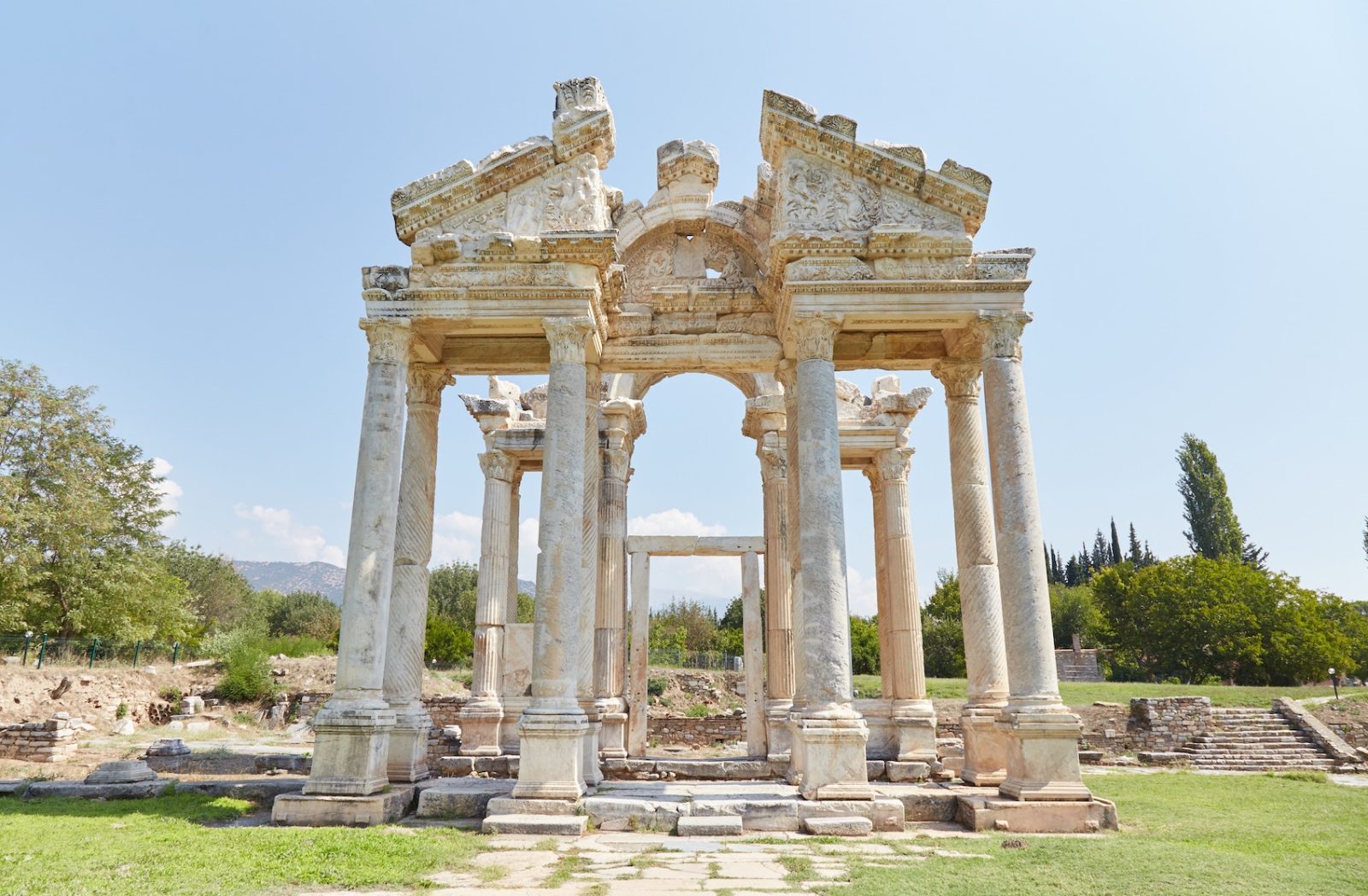
Aphrodisias
This ancient city dedicated to the goddess of love is located off the main route and features well-preserved marble sculptures and a stadium. It provides a quieter archaeological experience before or after the activity at Pamukkale.
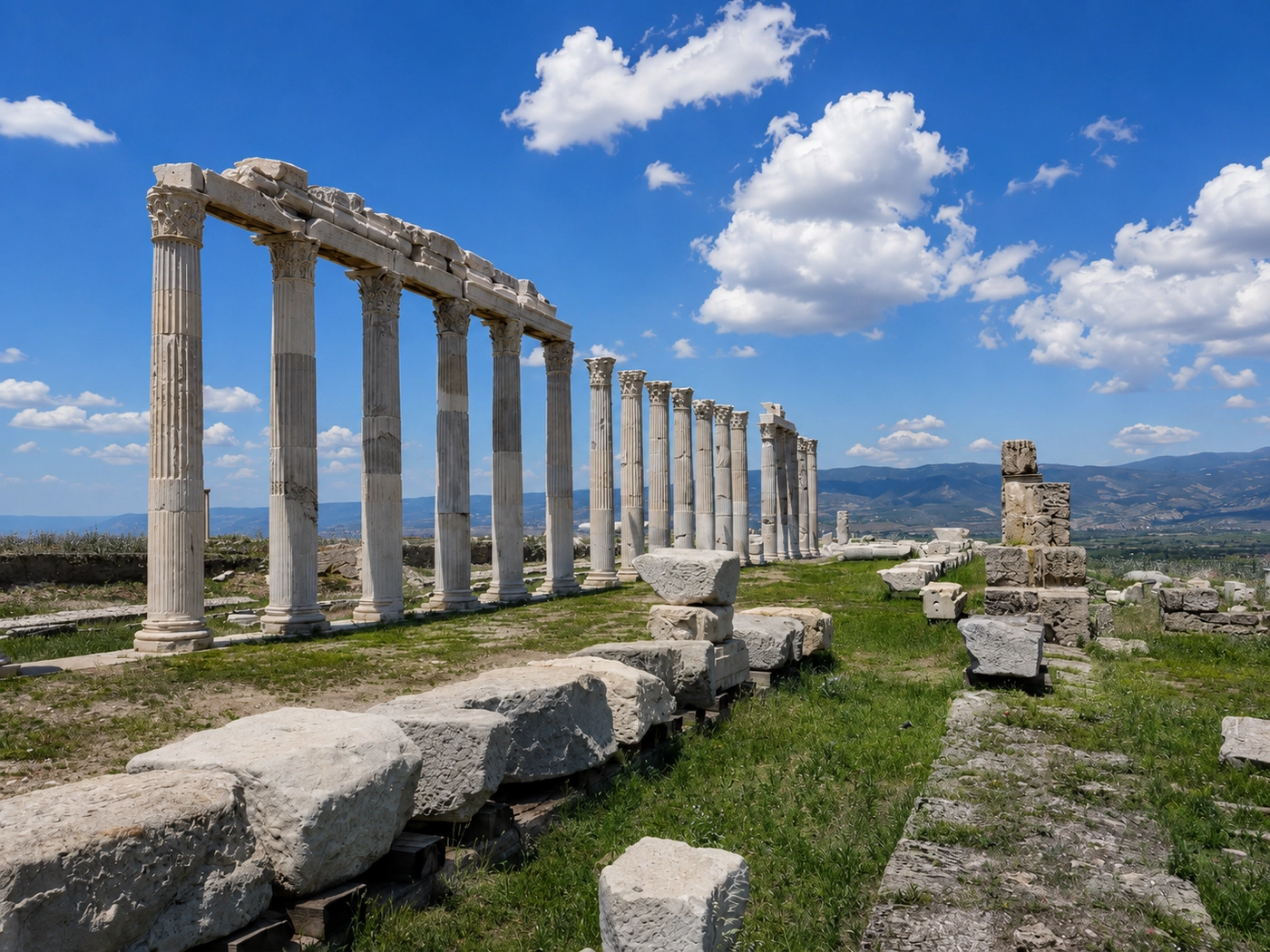
Laodicea
Situated near Denizli, this site offers a glimpse into an important early Christian center with partially restored churches and a theater. Its proximity makes it a convenient addition for those traveling directly into the Pamukkale area.
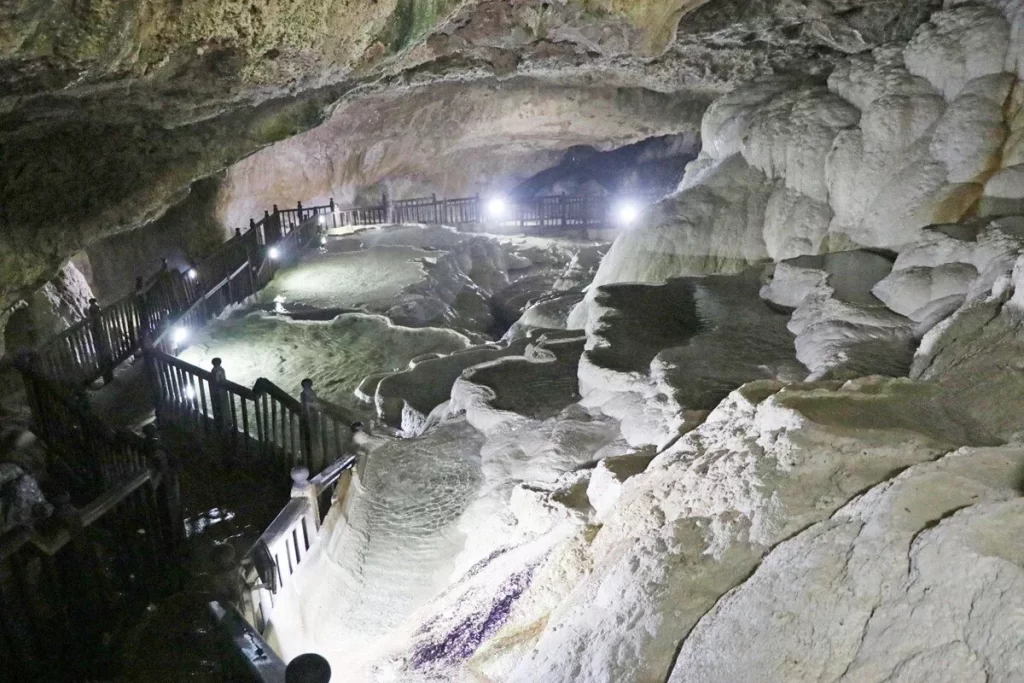
Kaklık Cave
Often referred to as the underground version of Pamukkale, this cave contains small travertine pools and stalactites. It serves as a geological contrast to the open-air terraces found at the main site.
Checklist for Your Trip From Ephesus To Pamukkale
A few things are worth sorting out in advance, because the road from Ephesus to Pamukkale is long and the travertines have rules of their own.
-
Reserve your seat or car weeks ahead — Summer transfers and rental cars sell out along the Selçuk–Denizli corridor.
-
Book Pamukkale accommodation before the trip — Staying overnight lets you reach the gates at 06:30 rather than mid-morning.
-
Carry your passport or national ID — Site staff and intercity carriers may ask to see identification.
-
Pack socks or barefoot-ready feet — Shoes are banned on the travertine terraces, and the calcium surface is rough underfoot.
-
Bring a swimsuit and quick-dry towel — The thermal pools and terrace water are usable, and changing facilities are limited.
-
Refill a large water bottle before leaving — The walk across Hierapolis to the terraces is exposed with little shade.
-
Load offline maps and a downloaded route — Mobile signal drops on stretches of the Aydın–Denizli road.
-
Check current conditions on muze.gov.tr — Terrace sections and pools close for maintenance without much notice.