12 hr
Ephesus & Pamukkale Full-Day Flight Tour from Istanbul
- Expert local guide
- Small group
- Skip-the-line access
- Free cancellation
Ephesus and Pamukkale Tour from Istanbul — Reserved Entry, Guided Days
Marble streets under early light, white terraces holding warm water.
Compare fares, pick the fit — all bookings are mobile-voucher and eligible for free cancellation where shown.
12 hr
48 hr
16 hr
| Experience | Duration | Rating | Transfers | Skip-the-line | Guide | Small group | Price | |
|---|---|---|---|---|---|---|---|---|
|
Guided Experience
Most popular
Ephesus & Pamukkale Full-Day Flight Tour from Istanbul
|
12 hr | ★ 4.7 | ✓ | ✓ | ✓ | ✓ | €477 | Book → |
|
Guided Experience
Ephesus & Pamukkale Two-Day Adventure with Flights
|
48 hr | ★ 4.3 | ✓ | ✓ | ✓ | ✓ | €340 | Book → |
|
Guided Experience
Ephesus Ancient City Full-Day Tour from Istanbul with Flights
|
16 hr | ★ 4.8 | ✓ | ✓ | ✓ | ✓ | €279 | Book → |
Worth it for time-pressed first-timers, not slow travellers
An ephesus and pamukkale tour from istanbul asks for something more expensive than money: roughly 12 to 14 hours of your day, most of it moving. What you get back is two UNESCO World Heritage sites in one sweep — the marble streets, Library of Celsus and Great Theatre of a Roman provincial capital, then the travertine terraces and thermal pools of Hierapolis. That is a serious return for travellers with four or five days in Turkey who would otherwise never leave the Bosphorus. The 40 EUR admission fee for Ephesus Ancient City per person is charged separately by most operators, so budget for it. Where these Turkey ancient sites tours stop paying off is for anyone with a week or more: the same ground covered by a slow overnight in Selçuk or Pamukkale costs less and gives you the ruins in early light rather than at midday, when both sites run hot and crowded.
Bottom line: If your Turkey trip is short and packed, book the ephesus and pamukkale tour from istanbul tickets and accept the travel time; if you have a spare night, sleep in Selçuk instead and arrive between 08:00 and 10:00 on your own terms.
Hand-picked experiences loved by thousands of travelers
2 days
Free Cancellation
Fly from Istanbul to explore stunning travertine terraces, ancient Roman cities, and sacred sites over two unforgettable days
17 hours
Free Cancellation
Fly from Istanbul to explore two iconic Turkish wonders in one unforgettable day of history and nature
3 hours
Free Cancellation
Journey through Byzantine and Ottoman heritage with skip-the-line access to three legendary landmarks
2.5 - 3 hours
Free Cancellation
Discover two of Istanbul's most magnificent landmarks with priority entry and expert commentary
3 hours
Free Cancellation
Discover Ottoman splendor with priority access to the palace complex and exclusive Harem chambers
15 hours
Free Cancellation
Explore WWI history at iconic landing sites, memorials, and cemeteries where Allied forces fought
16 hours
Free Cancellation
Discover two of Turkey's most spectacular ancient sites on this comprehensive guided excursion with flights
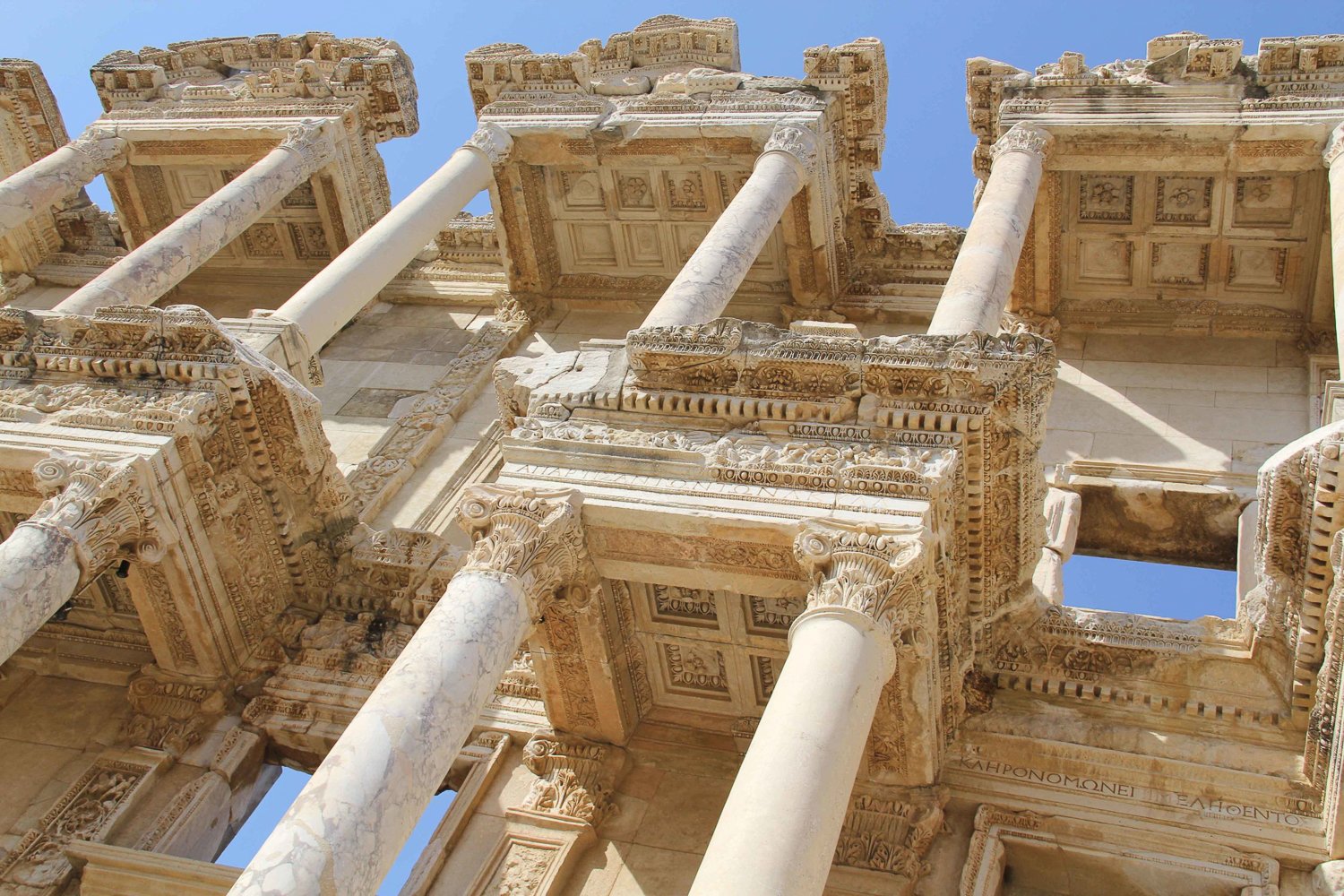
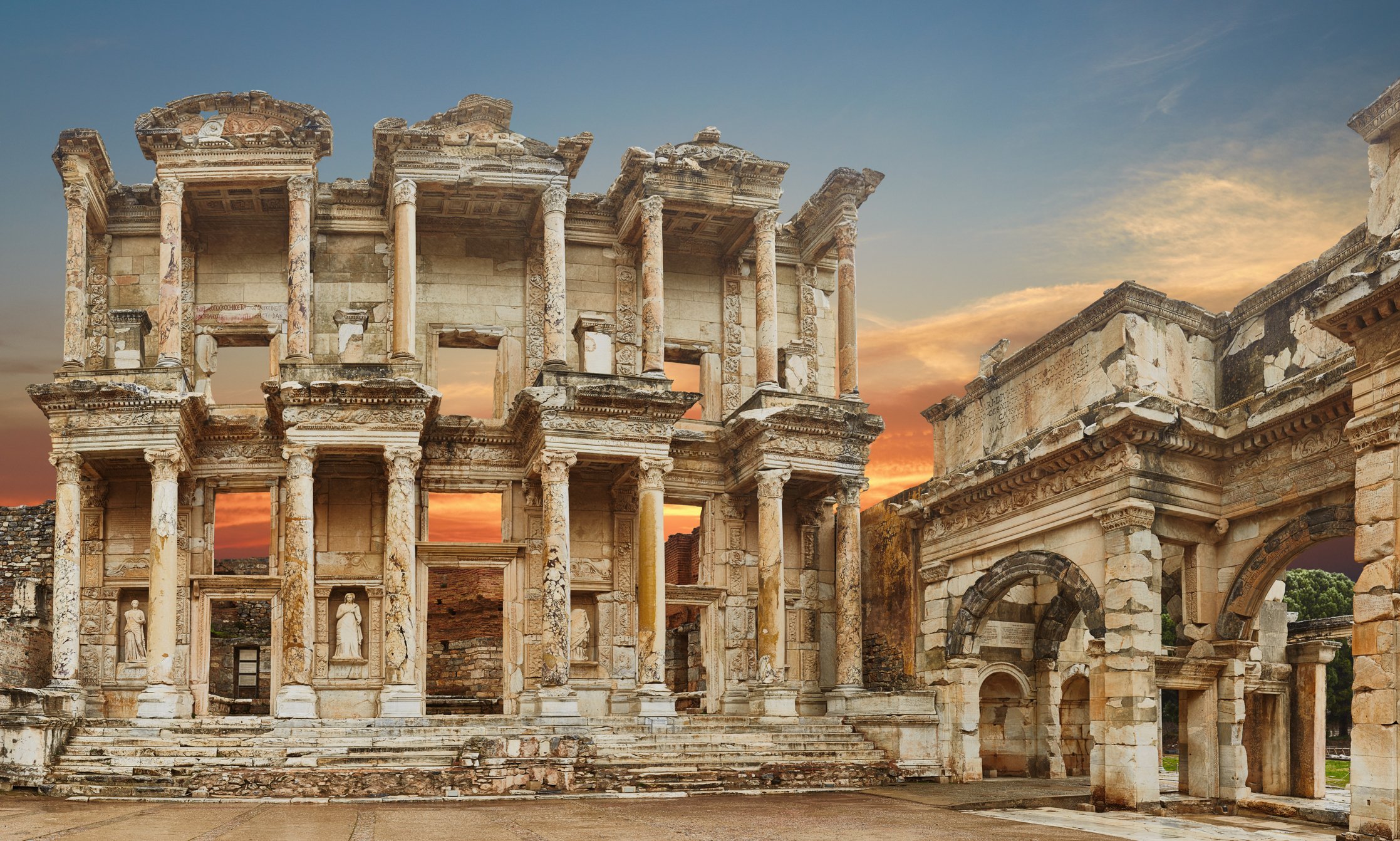
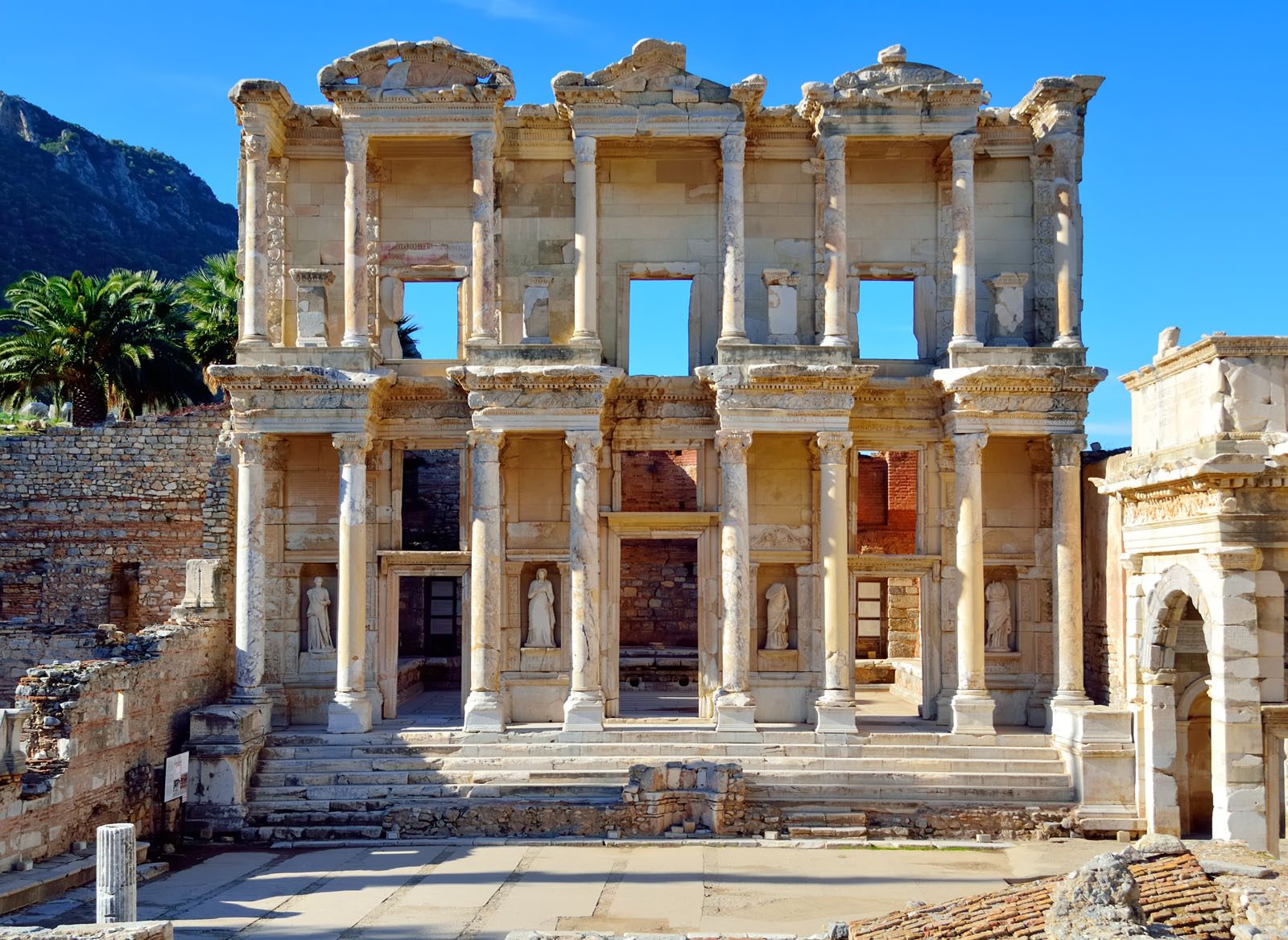
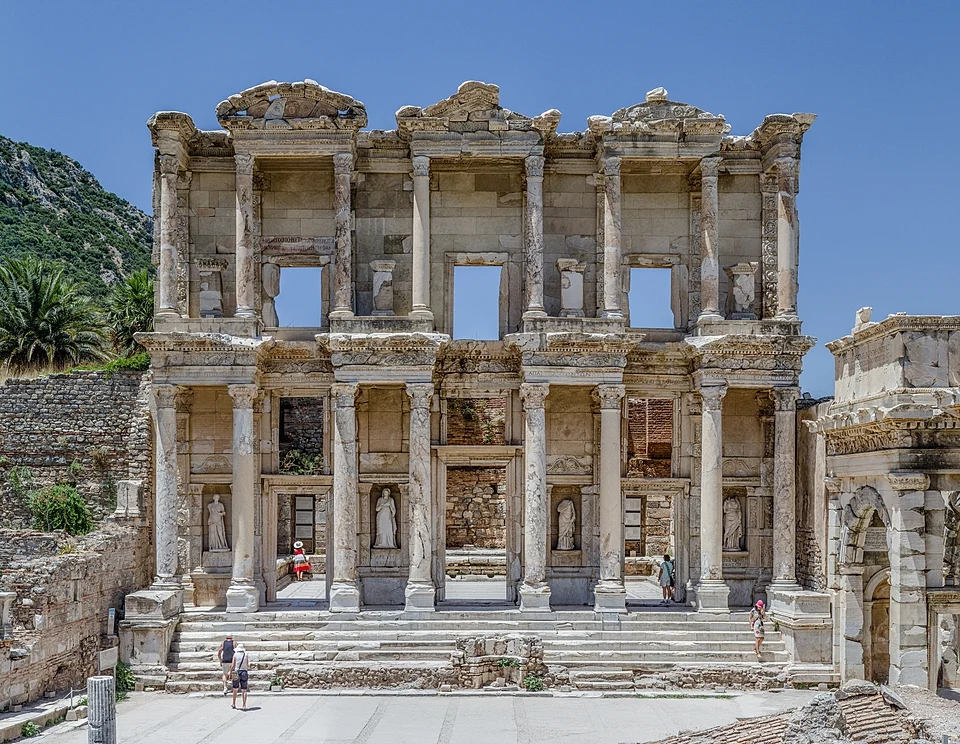
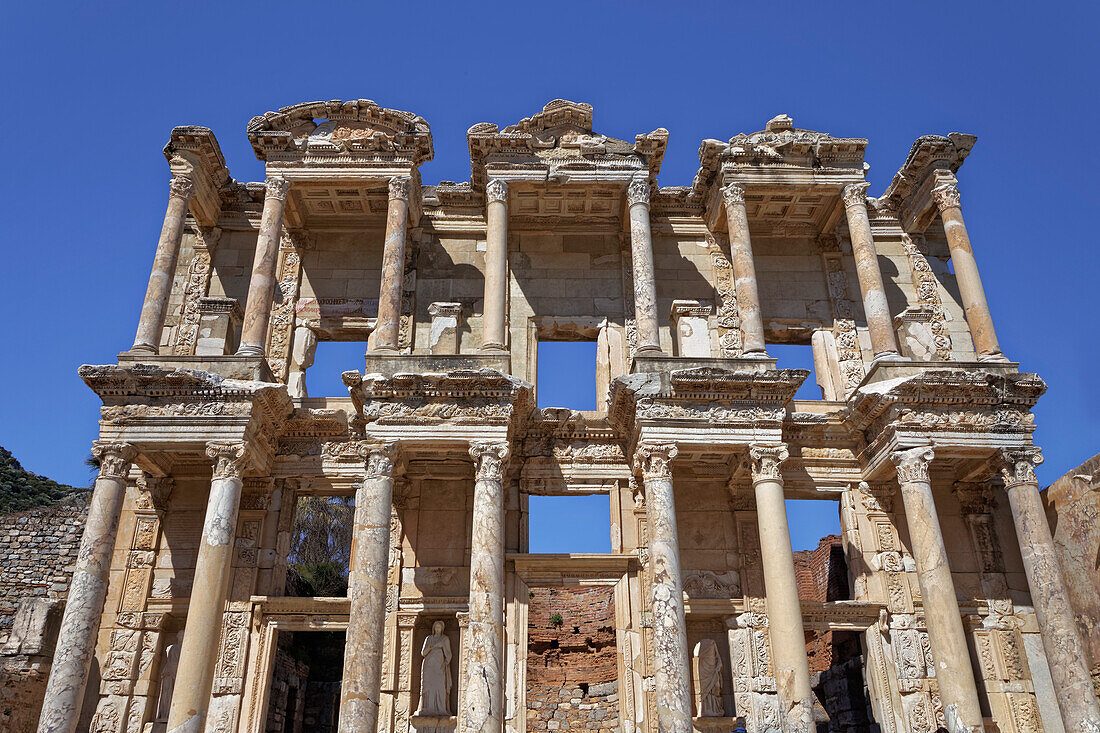
The iconic two-story Roman facade was designed to hold 12,000 scrolls. It remains one of the most photographed structures in the city.
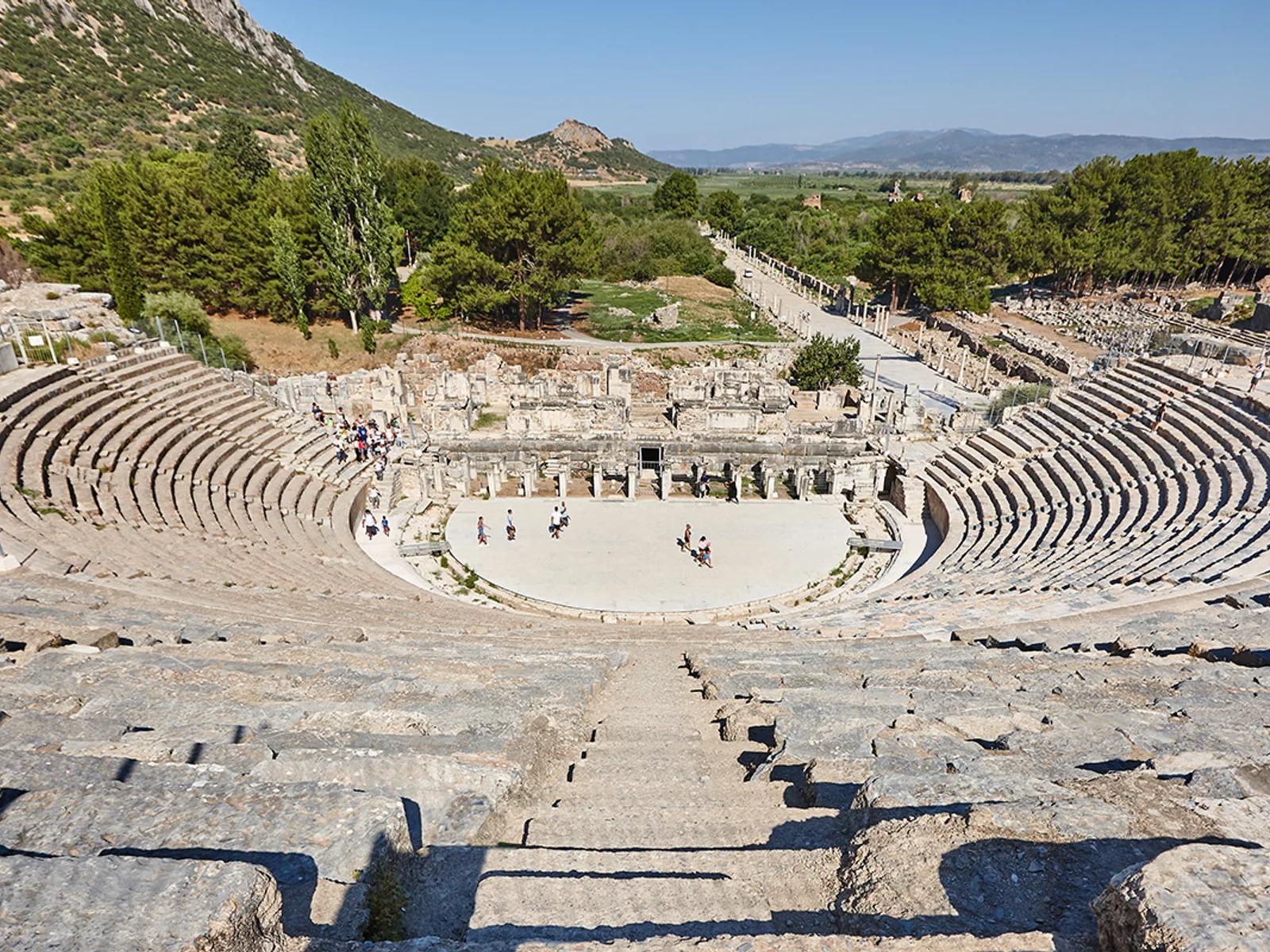
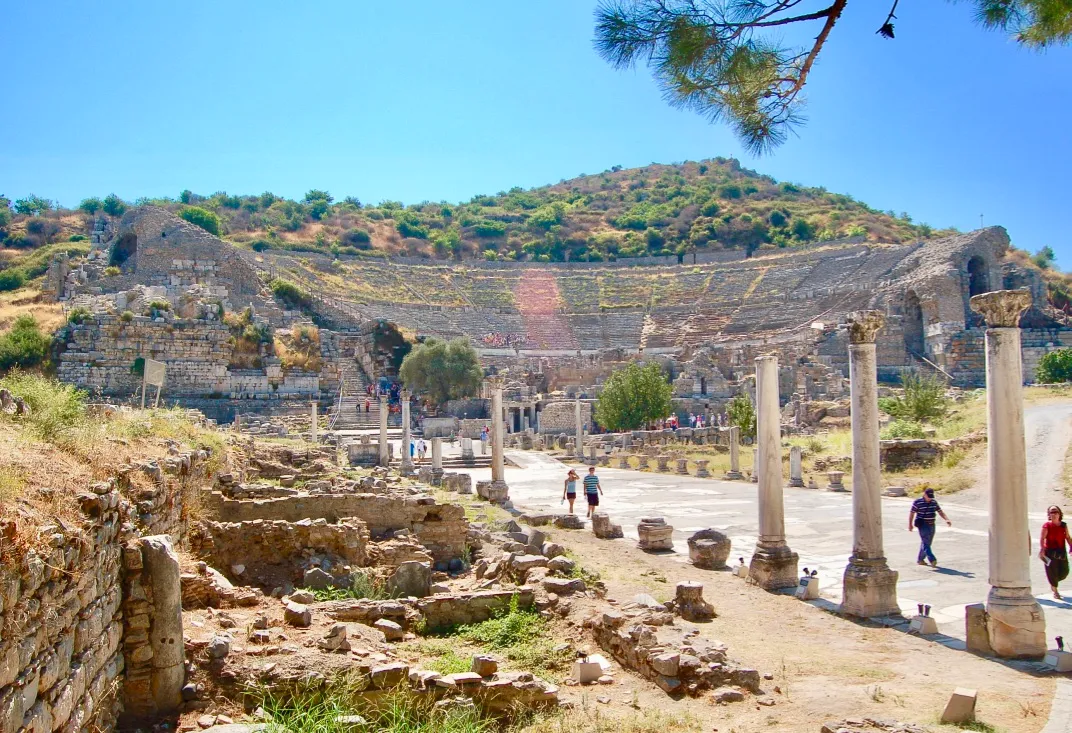
This massive structure once seated up to 25,000 spectators for political and religious events. It is a masterpiece of Hellenistic design.
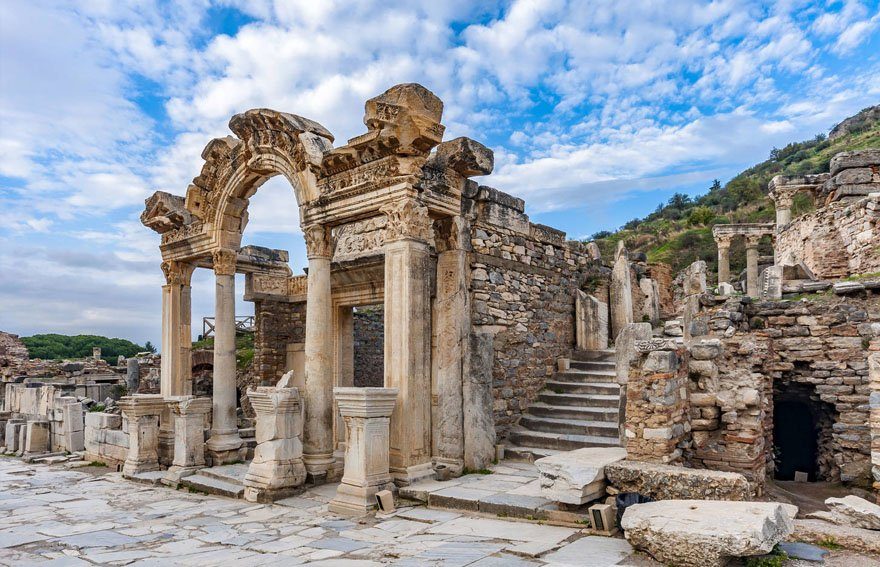
This small, intricately decorated temple features a famous relief of the Medusa head. It honors the Roman Emperor Hadrian.
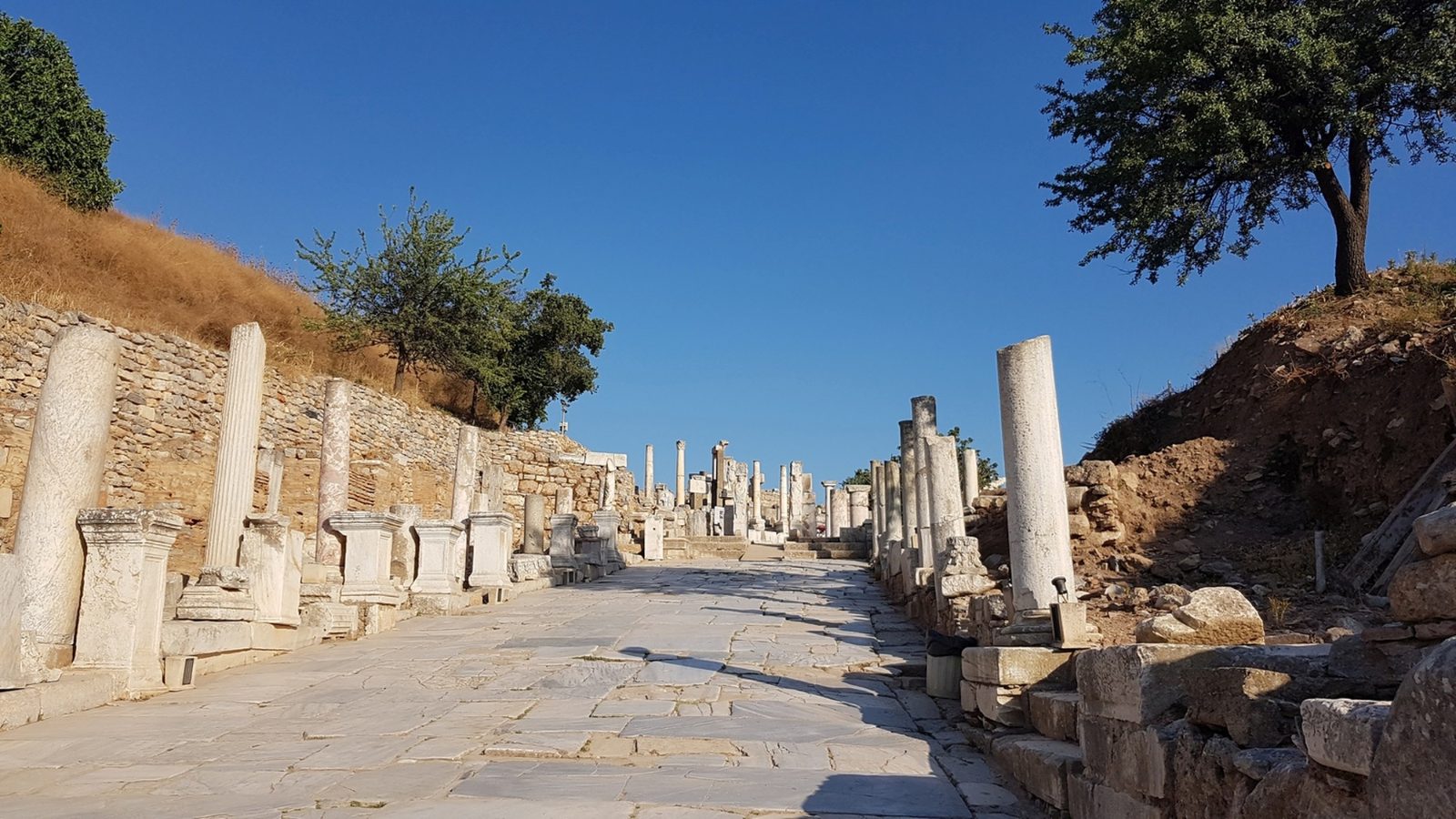
The primary ceremonial artery of the city, lined with marble columns and ancient public fountains.
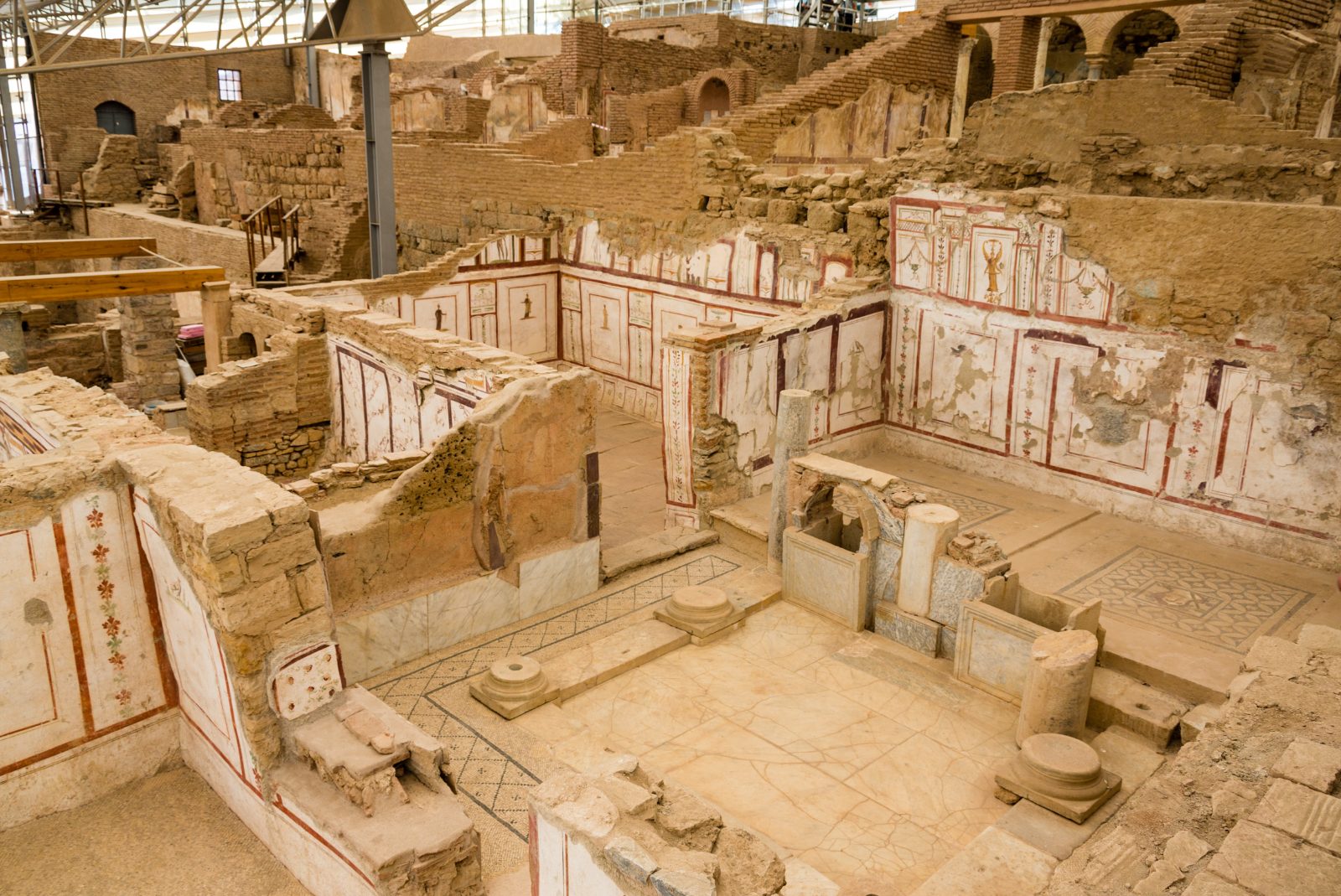
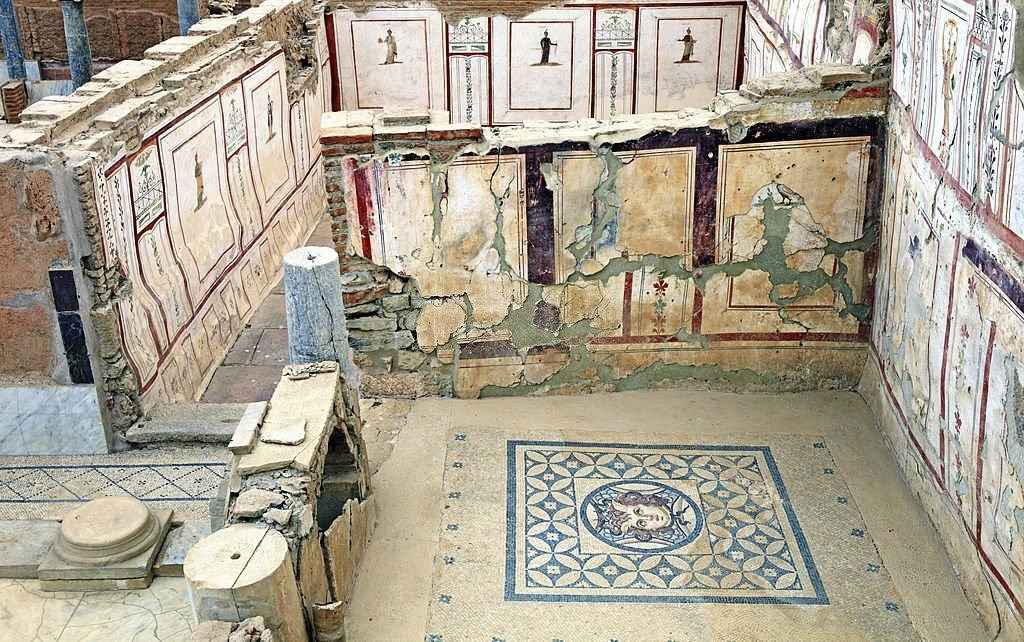
These elite residential homes feature preserved mosaics and frescoes that offer a view into wealthy Roman life.
You come through the upper gate between 08:00 and 10:00, while the marble is still cool and the light falls along Curetes Street rather than into it. The slope does the work; you walk downhill. Fluted column drums lie where they fell.
You stop beneath the Temple of Hadrian, find the Medusa head set above the arch, then step into the Terrace Houses and stand on a walkway suspended over mosaic floors laid nineteen centuries ago.
Lower down, the Great Theatre opens on your left. You climb ten rows, sit, and look west along the Arcadian Way toward a harbour that is no longer there.
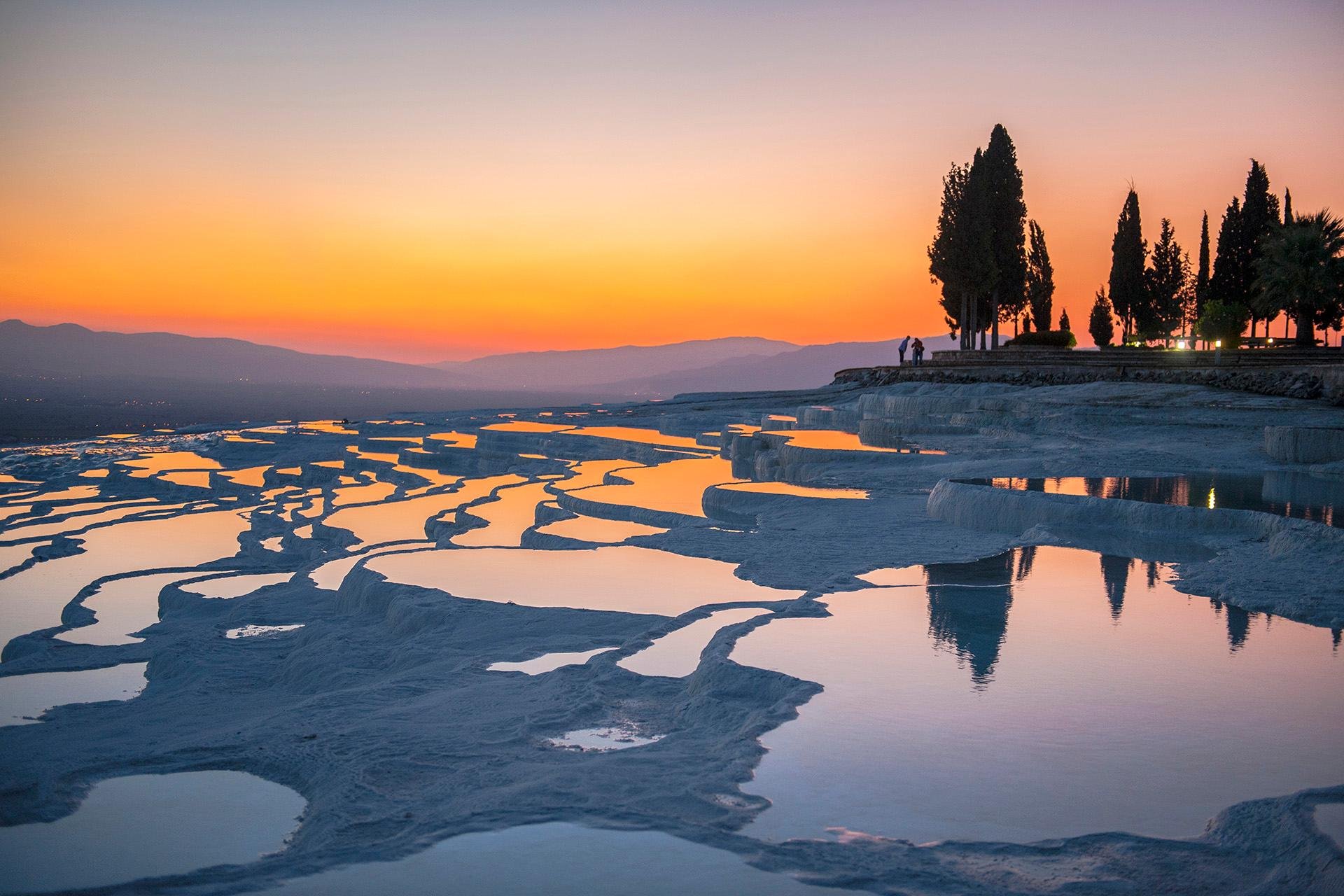
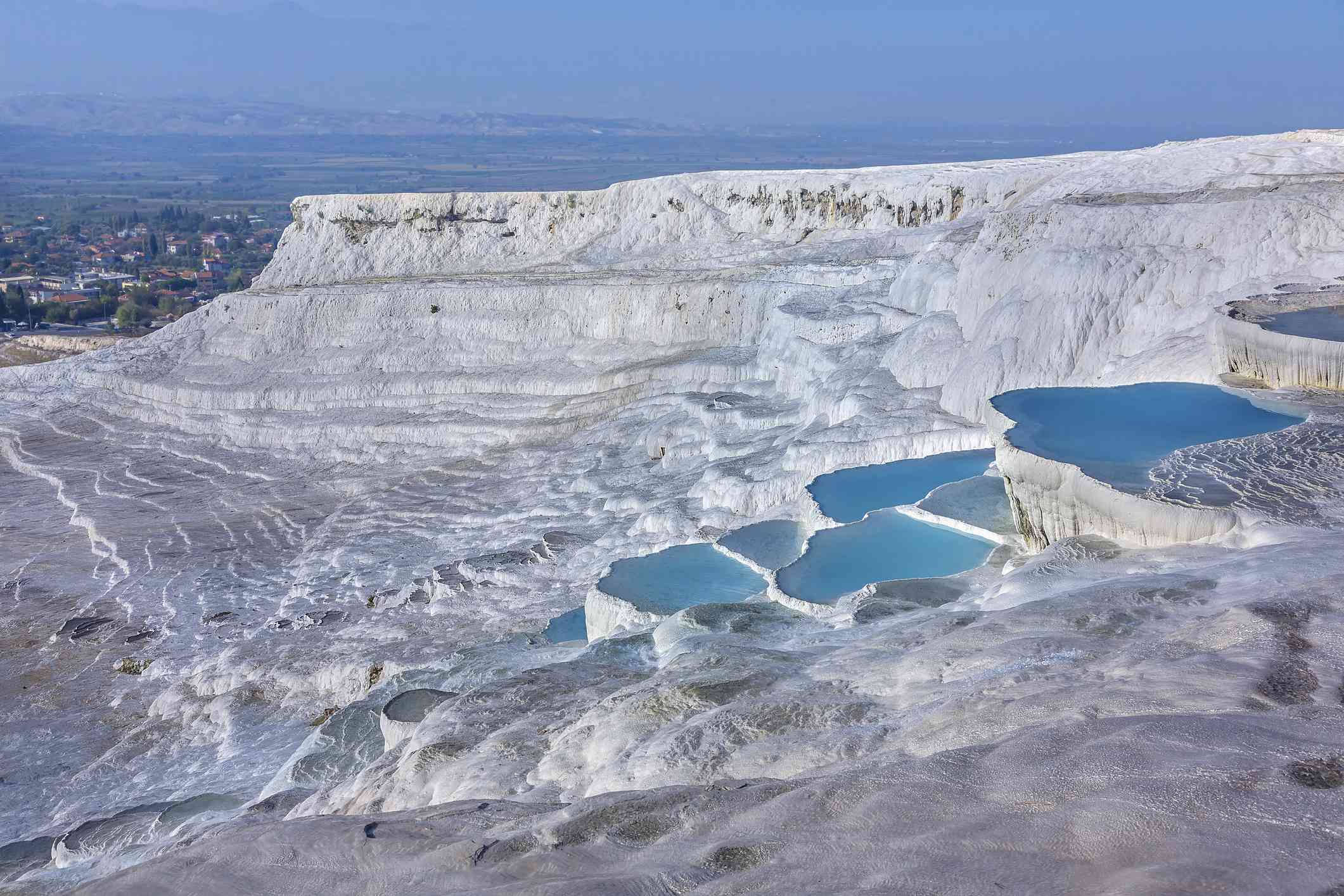
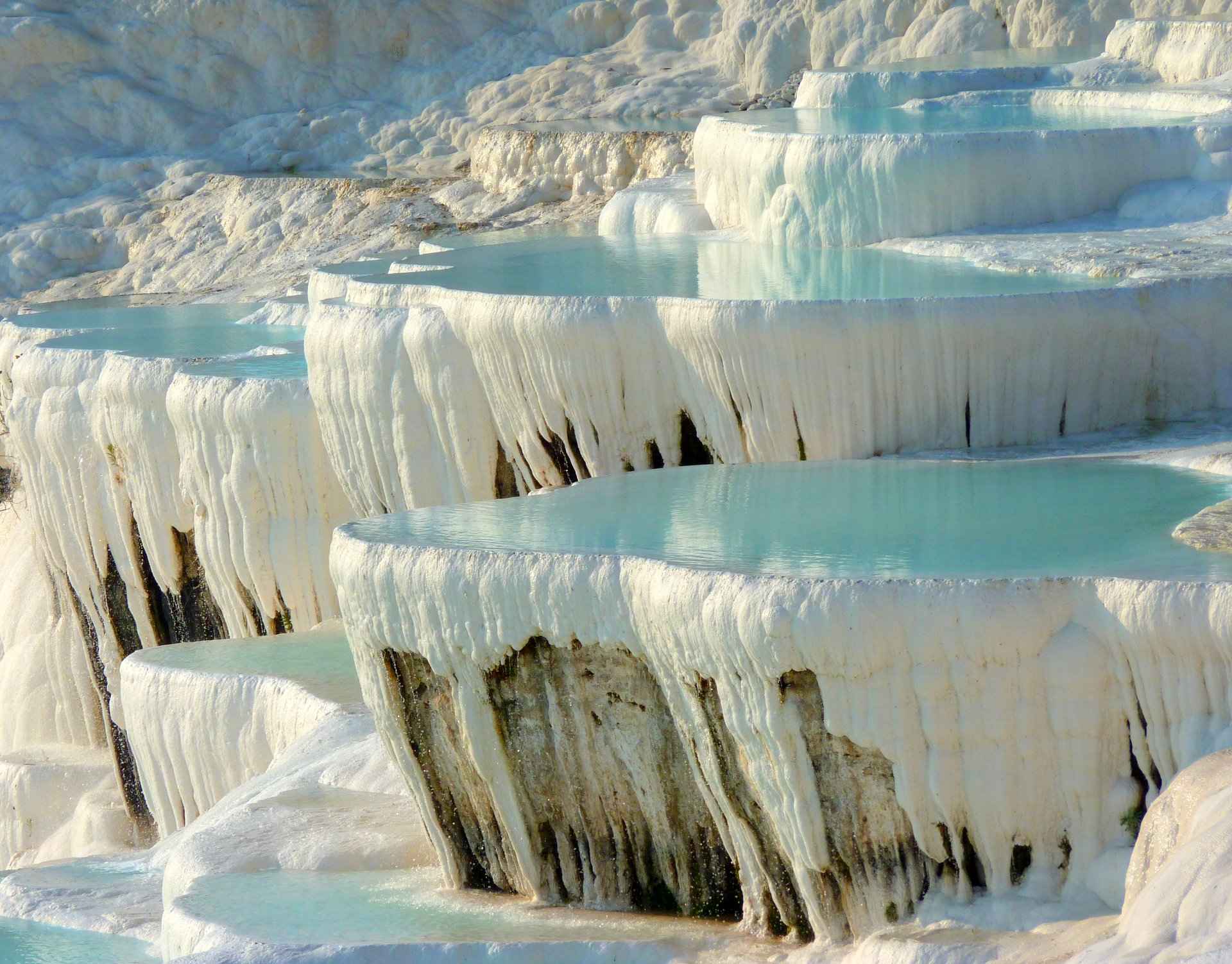
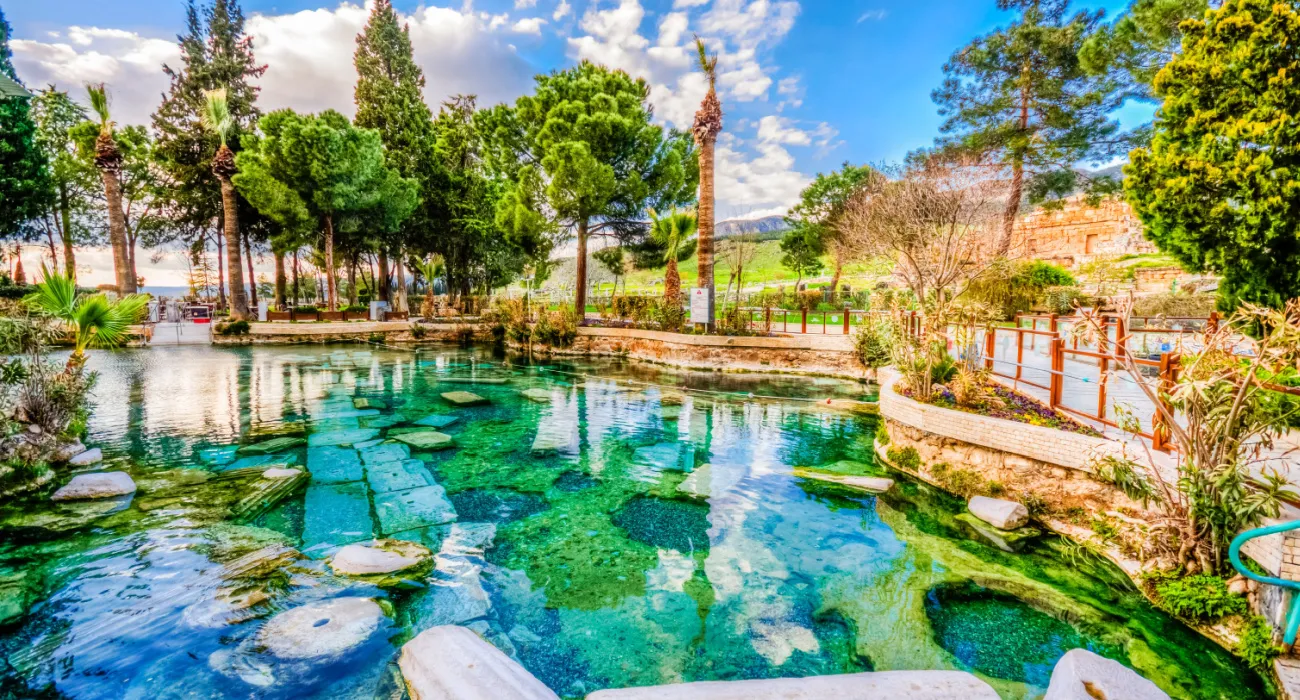
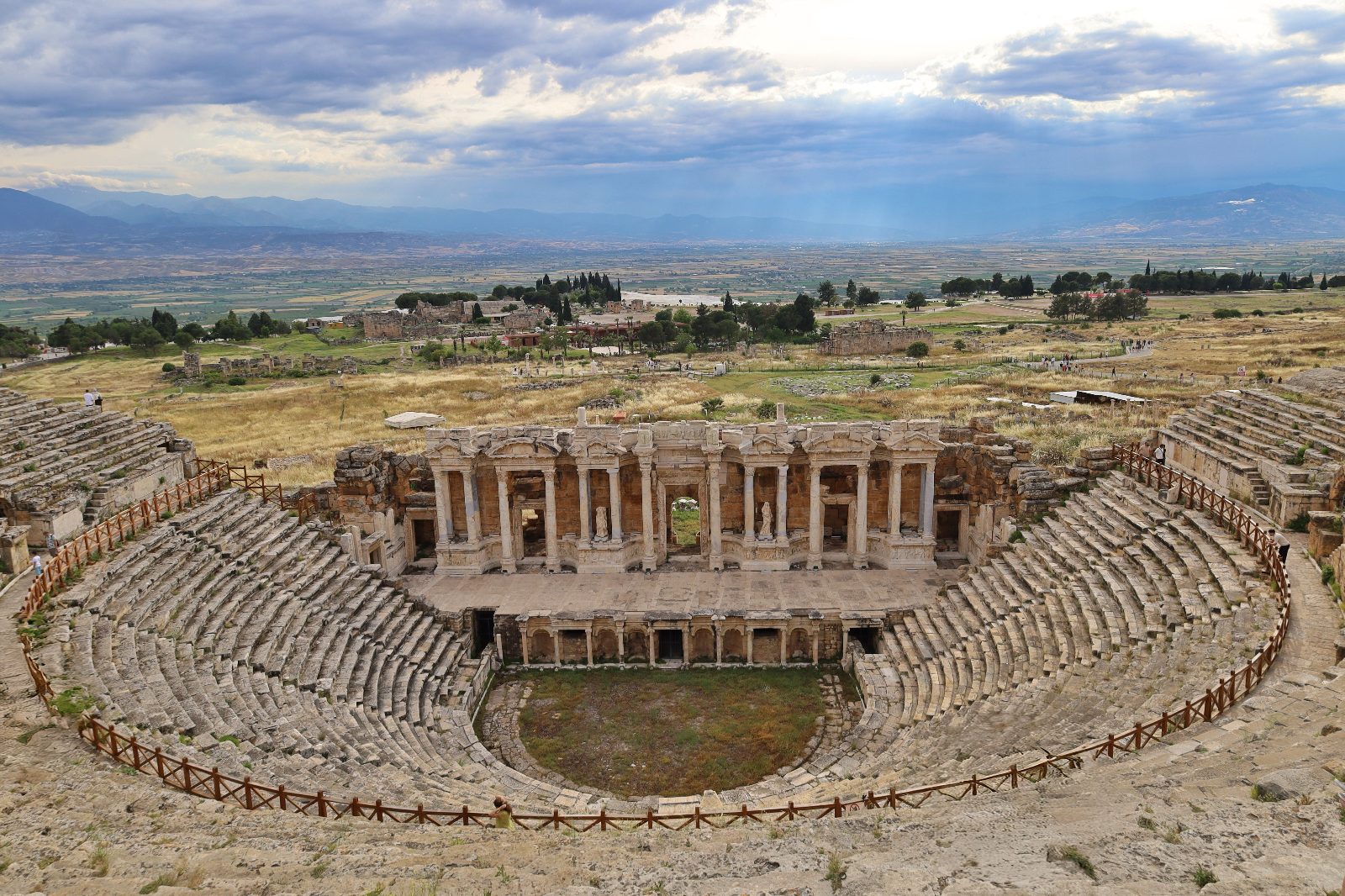
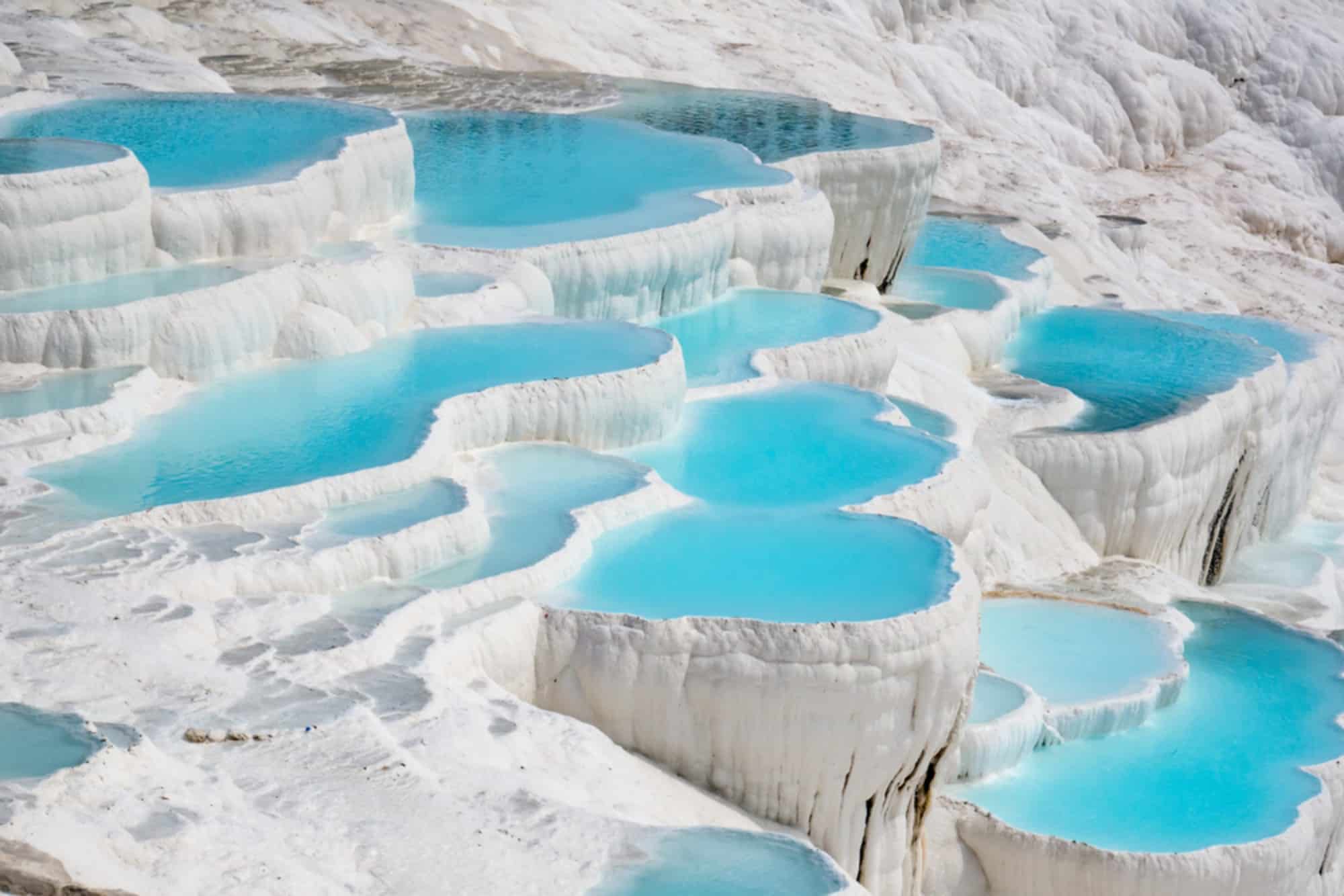
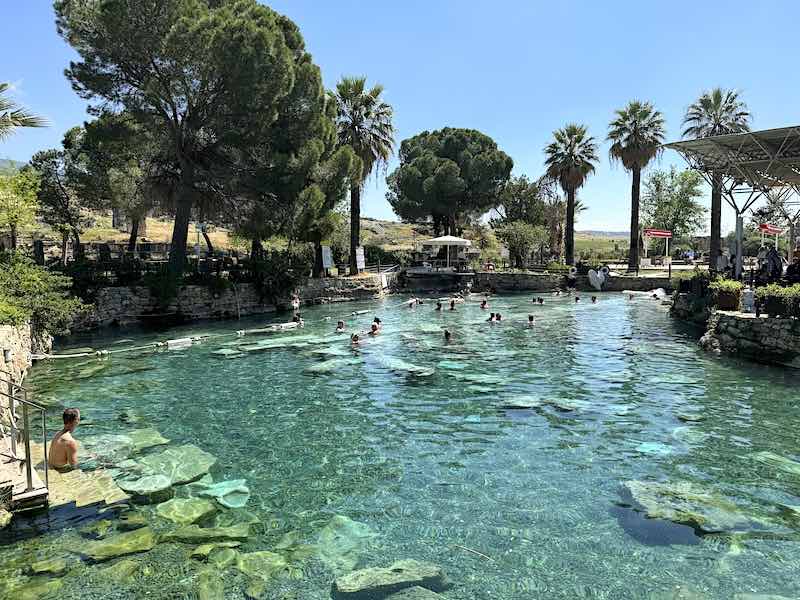
The next morning belongs to the terraces. You leave your shoes at the barrier — everyone does — and walk barefoot up the travertine channels, ankle-deep in warm mineral water, the crust chalk-white and faintly ridged underfoot. Above the rim lies Hierapolis. You cross the necropolis, pass the Cleopatra Pool with its sunken columns, and reach the carved stage front of the Roman theatre. If you have wondered how far is Ephesus from Pamukkale, the answer is simply the drive you made the evening before. Ephesus and Pamukkale Tour from Istanbul tickets usually cover both gates; the 40 EUR Ephesus admission is charged per person.
All the details about your upcoming adventure in one place
This ephesus and pamukkale tour from istanbul pairs two of Türkiye's UNESCO World Heritage sites in a single day, linking the marble streets of the ancient Roman port city with the white travertine terraces above the Menderes valley. You'll walk past the Library of Celsus, the Great Theatre and the Temple of Hadrian before flying south to Denizli for the calcium-rich thermal pools of Hierapolis. Domestic flights, park entry and a guided walk are bundled into the ephesus and pamukkale tour from istanbul tickets, so nothing needs arranging separately.
The Library of Celsus was built as a tomb. Tiberius Julius Aquila raised it around 117 CE to hold his father's sarcophagus beneath the reading room floor, and the slight outward curve of its façade is a deliberate optical trick, widening the building to the eye.
Travellers arriving on an ephesus and pamukkale tour from istanbul meet that façade first, at the foot of Curetes Street, and rarely register the geometry behind it.
Ephesus — Efes Antik Kenti in Turkish — was a harbour city that lost its sea. Silt from the Küçük Menderes pushed the coastline several kilometres west, and the port that once moved grain and marble now lies under farmland. Abandonment preserved what commerce would have replaced. The Great Theatre still seats an estimated 24,000. The Terrace Houses, roofed in glass since excavation, hold mosaic floors and painted walls from seven elite Roman households. Most Ephesus and Pamukkale Tour from Istanbul tours enter at Atatürk Mah, Efes Harabeleri Yolu, 35920 Selçuk/İzmir, then descend the marble slope toward the vanished harbour road.
Pamukkale answers its own name. The question of what is Pamukkale in Turkey resolves into pamuk kale, cotton castle: a hillside of calcium carbonate terraces laid down by thermal springs. Above them stands Hierapolis, a Roman spa city with a necropolis of more than a thousand tombs. The two form a single UNESCO World Heritage property. Distance shapes every itinerary. How far is Ephesus from Pamukkale is roughly 190 kilometres, close to three hours by road, while how far is Pamukkale from Istanbul runs nearer 600. The standard Ephesus and Pamukkale Tour from Istanbul tour circuit answers how to get from Ephesus to Pamukkale with one eastward transfer through the Menderes valley.
Both places matter now for opposite reasons. Ephesus preserves the civic architecture of a Roman provincial capital: the Odeon, the Temple of Hadrian, the fountain of Trajan, the processional way toward the Temple of Artemis. Pamukkale preserves a geological process still underway, its terraces rebuilt continuously by water that has never stopped running. A guided ephesus and pamukkale tour from istanbul holds both in one frame — engineered stone and mineral accretion, the made and the deposited. The Ephesus Ancient City gate opens 08:00–20:00, and admission is 40 EUR per person.

Ephesus preserves what was built; Pamukkale preserves what is still being made.
Casual clothing is fine for the Ephesus Ancient City, but modest dress—covering shoulders and knees—is required if your ephesus and pamukkale tour from istanbul includes a visit to the House of the Virgin Mary.
Security checks may occur at entry points for any ephesus and pamukkale tour from istanbul. Keep personal belongings with you at all times, as storage facilities are generally unavailable.
Personal photography is permitted throughout the archaeological site during an ephesus and pamukkale tour from istanbul. Professional shoots or the use of tripods require prior official authorization.
Children under 8 receive free admission to the ancient city when accompanied by a parent with proof of age. Family-friendly logistics are a common feature of an ephesus and pamukkale tour from istanbul.
Navigating the marble streets of Ephesus can be challenging due to uneven terrain. Most visitors on an ephesus and pamukkale tour from istanbul should be prepared for significant walking.
Carry water to stay hydrated during your ephesus and pamukkale tour from istanbul. While snacks may be sold near gates, food consumption inside the ruins is restricted.
Opening Hours
08:00–20:00
Address
Atatürk Mah, Efes Harabeleri Yolu, 35920 Selçuk/İzmir, Turkey
Accessibility
Uneven marble surfaces; partial wheelchair access
Best arrival
08:00–10:00
Site type
UNESCO World Heritage Site
Full refunds for an ephesus and pamukkale tour from istanbul are typically available up to 24 hours before the activity. Admission fees, such as the 40 EUR entrance fee, are often separate from tour costs.
Recommended time
3-4 hours
An ephesus and pamukkale tour from istanbul requires careful timing to navigate the marble streets and terrace complexes comfortably. Arriving during the best arrival window of 08:00–10:00 is essential to bypass the dense crowds that build as coach groups arrive from coastal resorts. Those managing ephesus and pamukkale tour from istanbul tours should allocate additional time if they intend to explore the Terrace Houses, while visitors utilizing ephesus and pamukkale tour from istanbul tickets often find that walking the site from the upper gate downward optimizes their energy levels during the warm midday period.
Crowd levels through the day
Ephesus began as a Greek settlement near the mouth of the Cayster River, refounded by Lysimachus around 294 BC when he moved the population inland to escape the silting harbour. That silt became the city's long defeat. Every century the sea retreated further, and today the ruins sit some five kilometres from the coast. Anyone tracing this shoreline on an ephesus and pamukkale tour from istanbul is walking across a drowned harbour turned farmland. The Temple of Artemis, rebuilt after an arson attack in 356 BC, drew pilgrims and money. Rome absorbed the city in 133 BC, and under Augustus it became capital of the province of Asia. The Library of Celsus was completed around AD 117 by Tiberius Julius Aquila for his father, Celsus Polemaeanus, whose sarcophagus lies beneath the reading room floor. The Great Theatre, expanded under Claudius and Trajan, held roughly 25,000 people; Acts records Paul's silversmiths' riot within it. The Terrace Houses preserve mosaic floors and painted walls from the same period. British engineer John Turtle Wood began excavating in 1863; Austrian teams have worked the site since 1895. Selçuk landmarks near the ruins include the Basilica of St John and the Isa Bey Mosque of 1375. Pamukkale's white terraces are geology rather than architecture. Calcium-rich water rises at about 35°C from a fault line and deposits travertine as carbon dioxide escapes. Hierapolis was founded above the springs by the Attalid kings of Pergamon in the second century BC and ceded to Rome in 133 BC. An earthquake in AD 60 flattened much of it under Nero; the rebuilt city gained the theatre and the necropolis of over 1,200 tombs. Hotels built on the terraces in the 1960s drained the pools until UNESCO listing in 1988 forced demolition and controlled reflooding. An ephesus and pamukkale tour from istanbul connects two sites shaped by the same tectonic instability. Whether travellers book flexible ephesus and pamukkale tour from istanbul tickets, join a guided ephesus and pamukkale tour from istanbul tour, or compare independent ephesus and pamukkale tour from istanbul tours, the ancient city and the springs remain a single story of water, stone and slow ruin.
Lysimachus relocates Ephesus inland after the original harbour silts up.
The Attalid kings of Pergamon found Hierapolis above the Pamukkale hot springs.
Both Ephesus and Hierapolis pass to Rome; Ephesus later becomes capital of the province of Asia.
An earthquake destroys much of Hierapolis, prompting a full Roman rebuilding.
The Library of Celsus is completed as a tomb and reading room for Celsus Polemaeanus.
John Turtle Wood begins the first systematic British excavations at Ephesus.
Austrian archaeologists start continuous work at Ephesus, uncovering the Terrace Houses.
UNESCO listing forces removal of hotels built directly on the travertine terraces.
Stand in the center of the marble street facing the main entrance to capture the iconic two-story Corinthian columns. This remains the hallmark image for any ephesus and pamukkale tour from istanbul.
Position yourself on the covered viewing platforms to photograph the intricate mosaics and frescoes preserved behind glass. This area offers a unique perspective on ancient domestic architecture.
Walk to the upper pools where the white calcium deposits contrast against the turquoise water. Capturing the mineral-rich flow from these UNESCO heritage formations is essential for those on ephesus and pamukkale tour from istanbul tours.
Capture the submerged Roman columns at the bottom of this thermal spring for an underwater photography aesthetic. The contrast of historical marble ruins within the natural spa environment creates distinct imagery for your ephesus and pamukkale tour from istanbul tickets.
Climb to the highest seating rows to frame the massive stone cavea against the backdrop of the distant valley floor. This wide-angle shot captures the scale of the Greco-Roman site for every ephesus and pamukkale tour from istanbul tour.
Real experiences from real travelers
We booked the ephesus and pamukkale tour from istanbul mostly for the ruins and ended up loving the terraces more. Walking barefoot on the warm white travertine at around six in the evening, with the water only ankle deep, felt strange and lovely. Bring a small towel, the sun dries you fast in July.
The scale of the Great Theatre is what got me, you sit halfway up and the whole harbour road runs straight out below you. Our guide kept the group small and explained the Curetes Street mosaics without rushing anyone. Easily the best of the Turkey landmarks we saw on this trip.
The grooved marble of Curetes Street is slippery in places so proper shoes matter more than people say. Later at Hierapolis I swam in the antique pool among the fallen column drums, the water is genuinely warm and slightly fizzy. A quiet highlight of the whole week.
It is a long day and you should accept that before booking, though the ephesus and pamukkale tour from istanbul packs in more than I expected. The terraces were busier than the ruins, and the light at the end of the afternoon made the calcium basins glow. My only note is that lunch was rushed.
March meant cool mornings and almost no crowds on the upper travertines. Standing at the top of Pamukkale looking down over the white cliffs toward the Menderes plain is something photos flatten completely. The Hierapolis necropolis on the ridge behind was an unexpected bonus.
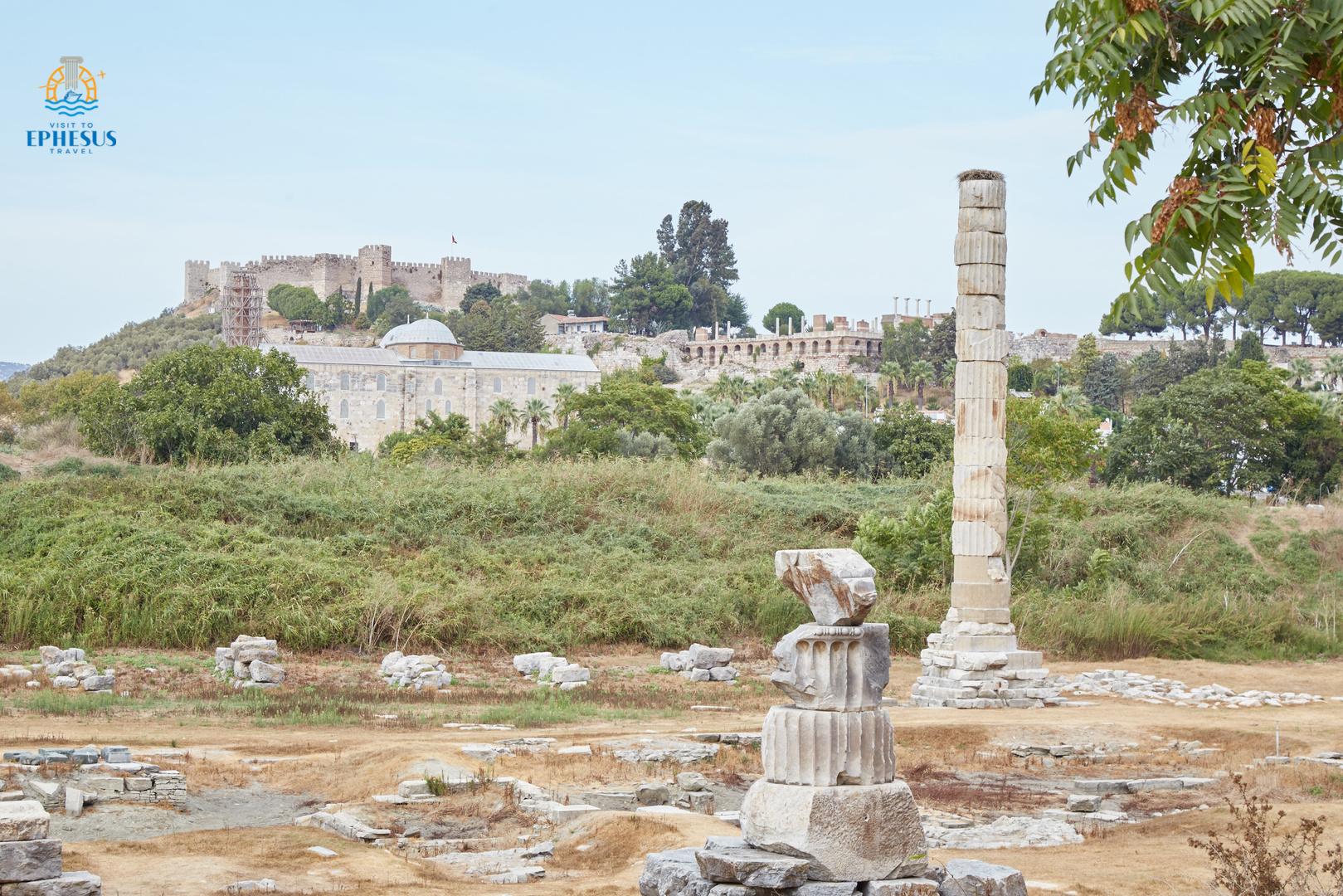
Our driver used the local name, Efes ve Pamukkale turu, and it stuck with us all day. The Temple of Artemis site is only a single column now but the guide made it matter, and the Terrace Houses with their frescoes were cooler and shaded, which helped in the heat.
We went in late winter and had the Ephesus ruins nearly to ourselves, just birds and wind through the stones. The thermal water at Hierapolis felt far warmer against the cold air. If you can handle a shorter day of light, the emptiness is a fair trade.
The ephesus and pamukkale tour from istanbul tour delivered exactly what the photos promise, though the travertine is rougher underfoot than it looks. At midday the white surface throws light back at you so sunglasses are essential. I liked that we saw the ruins first while it was cooler.
Plenty of walking on uneven ground at both sites, so I would not recommend it for anyone with knee trouble. The guide on our ephesus and pamukkale tour from istanbul tours knew the Hierapolis theatre well and pointed out carvings I would have walked past. Comfortable coach, decent stops.
Swimming among the submerged marble in the Cleopatra pool at Hierapolis was the memory that stayed with me, the water clear enough to see the fluting on every drum. Ephesus earlier that day smelled of dry pine and hot stone. Our ephesus and pamukkale tour from istanbul tickets covered both entries which simplified everything.
Everything you need to know for your journey
The entrance fee for Ephesus Ancient City is 40 EUR per person.
Most operators exclude the 40 EUR admission fee from the price of your ephesus and pamukkale tour from istanbul.
The best time for an ephesus and pamukkale tour from istanbul is early morning, between 08:00 and 10:00.
There is no formal dress code, though modest attire is recommended for sacred sites on your ephesus and pamukkale tour from istanbul.
An ephesus and pamukkale tour from istanbul typically spans multiple days to cover both major sites comfortably.
Yes, children under 8 enter the ancient city for free, making it great for a family-focused ephesus and pamukkale tour from istanbul.
Yes, you should carry 40 EUR in cash for your ephesus and pamukkale tour from istanbul entrance fees.
Yes, personal photography is permitted during an ephesus and pamukkale tour from istanbul.
Bring sunscreen, a hat, and comfortable shoes for your ephesus and pamukkale tour from istanbul.
Arrive at the site between 08:00–10:00 to avoid the worst heat and crowds during your ephesus and pamukkale tour from istanbul.
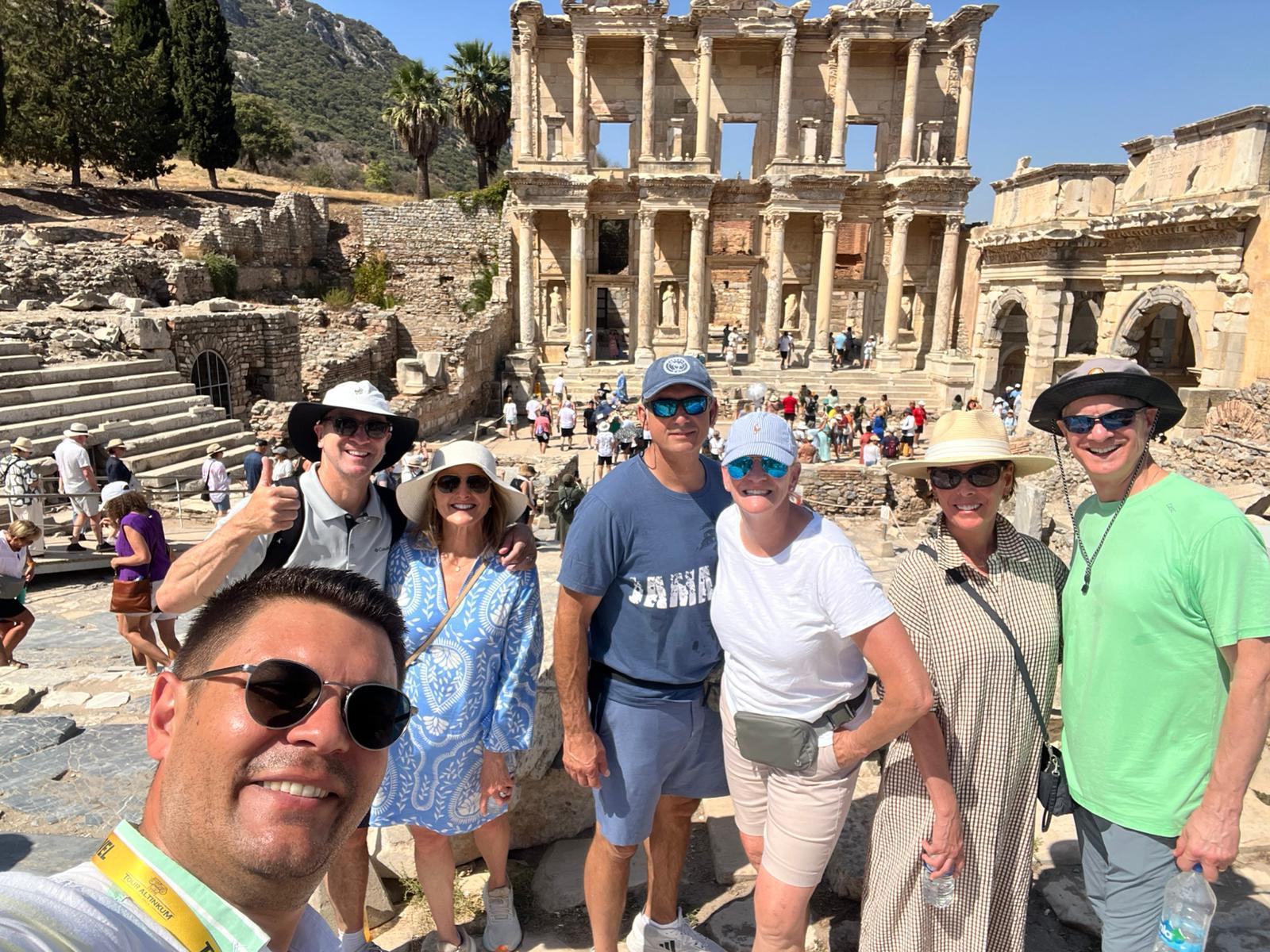
Join thousands of happy travelers who have discovered this incredible experience
Book Your Experience Now